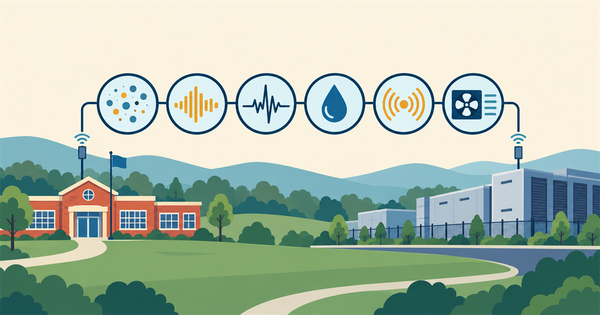
What Happens Next With Frederick County’s Data Centers?
Frederick County has paused new data-center applications, but it has not paused construction already authorized. Here is what stopped, what did not, and what residents should watch next.


Frederick County has paused new data-center applications. It has not paused data-center construction.
That distinction is the most useful way to understand where the county stands after several noisy weeks of hearings, negotiations, public comments, and reversals.
As of Saturday, September 26, the currently posted county and state calendars show no major Frederick County data-center hearing, open house, Planning Commission action, or Public Service Commission event for the week of September 28 through October 2.
The absence of a meeting does not mean nothing is happening. It means the next phase is more likely to unfold through documents, development-review records, state analysis, and work already authorized at Quantum Frederick.
What Stopped
On September 14, County Executive Jessica Fitzwater rejected Catellus’s application for a Development Rights and Responsibilities Agreement, or DRRA, for the Frederick Digital Campus in Adamstown.
That ended the proposed agreement. It also ended, at least for now, the package of negotiated community benefits attached to it. Those proposed benefits should not be treated as secured funding or enforceable commitments.
Fitzwater also extended the county’s pause on new data-center applications to July 1, 2027. The prior end date had been December 31, 2026.
The extension matters. It prevents Frederick County from accepting and processing new applications while officials and residents assess what the state’s promised impact analysis, additional public records, and continuing local experience reveal.
But a pause on new applications is not a revocation of old approvals.
What Did Not Stop
The county’s own data-center page states that the pause does not apply to properties that received development approvals before the County Council considered CB 25-09 on June 17, 2025. It also says the pause does not stop projects already under construction.
That includes activity at Quantum Frederick tied to approvals granted years earlier. County planning records show the large Quantum preliminary plan received conditional approval in December 2021. Later site plans, permits, road work, utility work, and construction can therefore continue where they fall within those existing approvals and satisfy the remaining requirements.
This is why residents can simultaneously hear that Frederick County has paused data-center applications and see construction continuing near Adamstown. The two facts are not contradictory. They describe different parts of the development pipeline.
The strongest case for the county’s position is that a pause can still prevent the pipeline from expanding while leaving vested or previously approved work alone. That is meaningful. It is simply not the same thing as a countywide construction shutdown.
The State Report Is Now An Accountability Question
Maryland law required a Data Center Impact Analysis and Report examining environmental, energy, and economic effects and called for the final report to be submitted to the governor and General Assembly by September 1, 2026.
That date has passed.
As of this review, FredCo Paper Trail could not locate the completed report in the public state materials checked. Frederick County’s own data-center page still points readers to the law and describes the analysis as something the state was scheduled to complete.
The next question is therefore not merely what the report will say. It is where the report is, whether it is complete, and when the public will be able to examine its assumptions, data, and recommendations.
A useful report should not simply tally investment and tax revenue. It should separate temporary construction jobs from permanent employment, gross revenue from net public benefit, one-time payments from recurring taxes, and statewide gains from costs concentrated in host communities.
The Public-Records Trail Still Matters
FredCo Paper Trail also has outstanding Public Information Act requests related to the development of the rejected DRRA.
Those records could help answer questions that the final public proposal could not: who drafted particular terms, what alternatives were considered, what county officials asked for, what Catellus resisted, and how the proposed benefits were valued against the rights the agreement would have granted.
The agreement is dead. The process that produced it remains a legitimate subject of public scrutiny.
What To Watch Next
Going into October, residents should watch four things.
First, watch for the state Data Center Impact Analysis and Report—or an official explanation for its status.
Second, watch the county’s Planning Commission agendas, development-review files, site plans, permits, and road-closure notices for Quantum Frederick. The pause does not erase the previously approved development pipeline.
Third, watch for the county’s response to the state analysis. Extending the pause creates time, but the public should expect officials to explain what evidence will determine whether it ends, changes, or is replaced by new legislation.
Fourth, watch the PIA record. Emails, drafts, meeting notes, and negotiating documents may reveal more about the DRRA than the public-facing proposal ever did.
No major data-center meeting appears on next week’s calendars. That is not a reason to manufacture urgency.
It is a reason to be precise about the status of the issue.
The Catellus agreement stopped. New applications are paused until July 1, 2027. Previously approved construction did not stop. The state analysis is still a document the public needs to see. And the paper trail behind the rejected agreement is not finished arriving.
The pause changes what can enter the pipeline. It does not empty the pipeline already there.