
Frederick County
Frederick Council Passes Values Act. The Next Test Is What Gets Recorded.
The Council voted 5–2 for rules on County employees’ response to immigration enforcement. The next test is how encounters and exceptions get recorded.
Data Centers
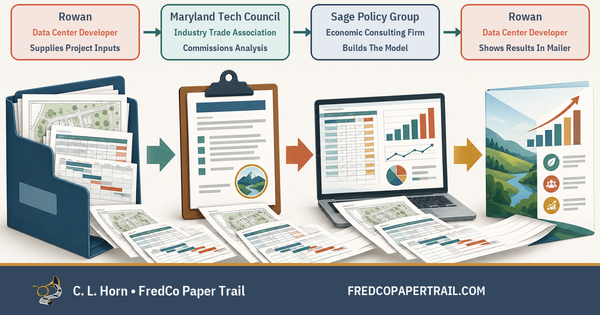
The Maryland Tech Council hired Sage to estimate benefits from Rowan’s projects. Rowan supplied some starting numbers. What did the forecast leave out?

Frederick County
Find an election judge, get help with a voting concern, understand identity challenges and check Frederick County’s observer certificate deadlines.

Data Centers
Rowan promotes construction work, career pathways and operating jobs. Its employment figures use different units, timeframes and project scopes.

Frederick County
Bill 26-11 defines law-enforcement officers broadly but ties its restrictions to immigration enforcement. Before the October 20 vote, the Council still needs to clarify who is covered—and what record will exist when an exception is used.
Data Centers
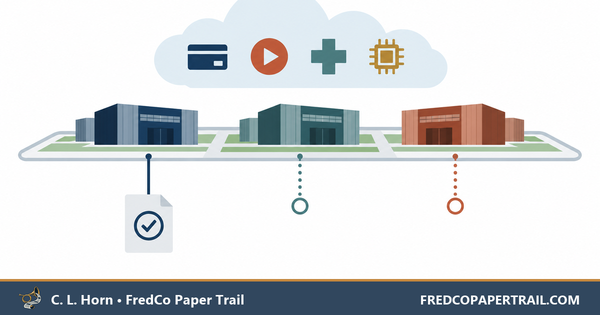
Rowan explains what data centers do in general, but its mailer does not identify every tenant, operator or workload associated with the three Bauxite projects.

Data Centers
Three reported attendance figures make Rowan's 225-plus total plausible. They do not prove 225 unique people, public support or influence over project decisions.

Rowan Digital Infrastructure
Six newspaper-style features in Rowan's mailer appeared in the Frederick News-Post's paid-content section. The mailer keeps their headlines, bylines and reported form while omitting the labels that said they were produced for Rowan.
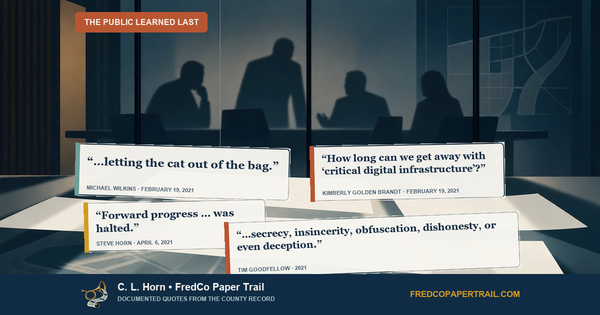
County officials and private representatives shaped Frederick County’s data-center policy while the public Sugarloaf planning process stalled. Residents obtained the central drafting record only after the law passed and litigation forced disclosure.

Rowan Digital Infrastructure
Rowan's mailer places favorable local and institutional voices beside company claims and economic statistics. The speakers' roles show what their testimony can support—and what it cannot.
Get clear, document-based Frederick County reporting in your inbox.
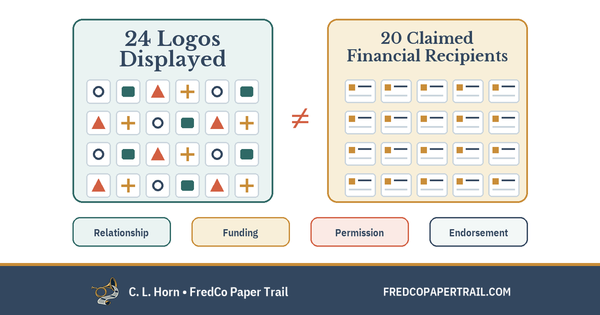
Rowan's mailer displays 24 logos and separately claims financial support for 20 organizations. Logo placement does not establish funding, permission or endorsement.

Rowan's community relationships include grants, sponsorships, in-kind work and collaborations. Recipient-side evidence shows why those categories should remain distinct.

Rowan uses photographs of local children to support its community-benefit message. The images raise distinct questions about provenance, permission and promotional reuse.

Rowan's 16-page Frederick County mailer combines documented projects, company claims, economic projections, photographs, testimonials and logos into one community-benefit story. This series separates what the document proves from what its design encourages readers to assume.
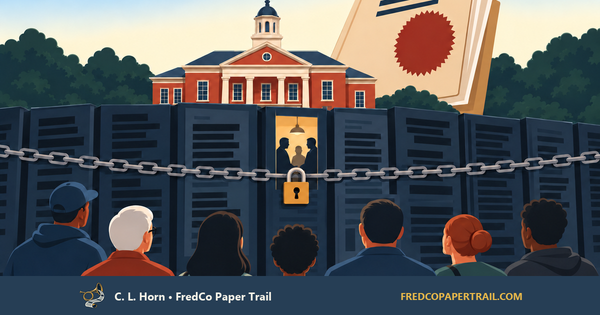
Quantum’s lawsuit does not prove Frederick County owes it $500 million. It does show the cost of allowing consequential commitments to accumulate before residents can see and evaluate the complete bargain.

Frederick County narrowed the IW2 industrial maps, restored the changes two weeks later, rejected a planning-first motion, and then approved both the plan and rezonings. The maps moved. The infrastructure did not.
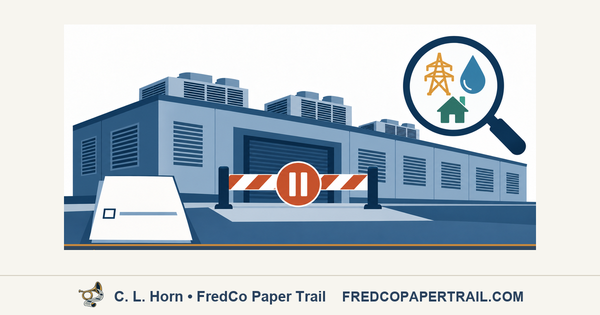
The draft would freeze land-use amendments for data centers in the City of Frederick while officials study their impacts. It would not create a permanent ban, prohibit all developer contact, or produce a vote at Thursday’s work session.
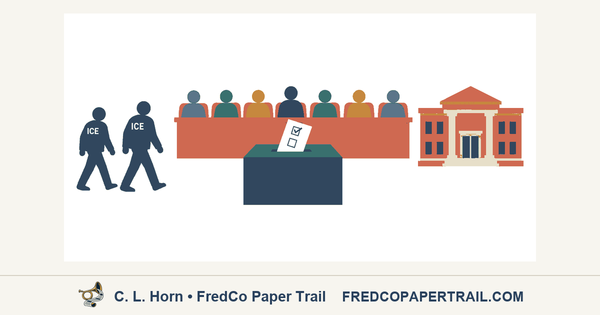
Bill 26-11 would create real limits on county cooperation with immigration enforcement. A new amendment defines emergencies, but the bill still lacks a public way to test compliance.
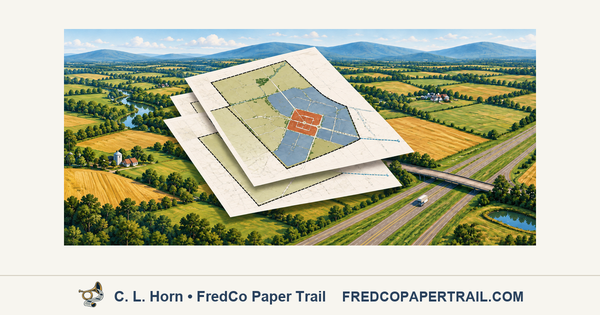
Frederick County’s October 6 agenda schedules decisions on the IW2 plan and its associated rezonings. Here is what the vote could change and how residents can participate.

Frederick’s new city and county dashboards make climate work easier to see. Their real test is whether status labels lead to budgets, ordinances, enforceable standards, and public explanations when deadlines slip.
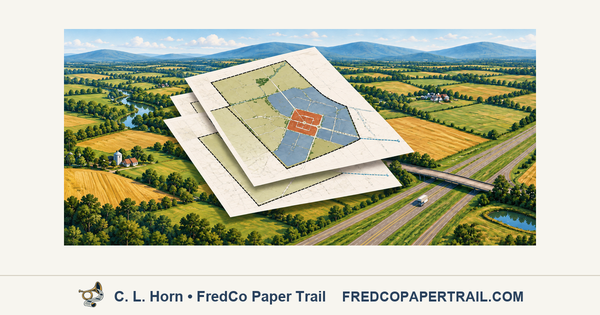
Five September 29 amendments did not restore longstanding industrial zoning. They revived a new Agricultural-to-LI conversion at Mount Zion and a GI concept near Mott Road similar to one rejected in 2012—while roads, utilities, and corridor planning remain unfinished.

Loudoun built an enormous data-center tax base after accepting enormous cumulative burdens. Frederick risks accepting many of the same categories of risk for smaller, later and less certain public returns.