Rowan Mailer Audit, Part 2: Children Are Not Scenery
Rowan uses photographs of local children to support its community-benefit message. The images raise distinct questions about provenance, permission and promotional reuse.

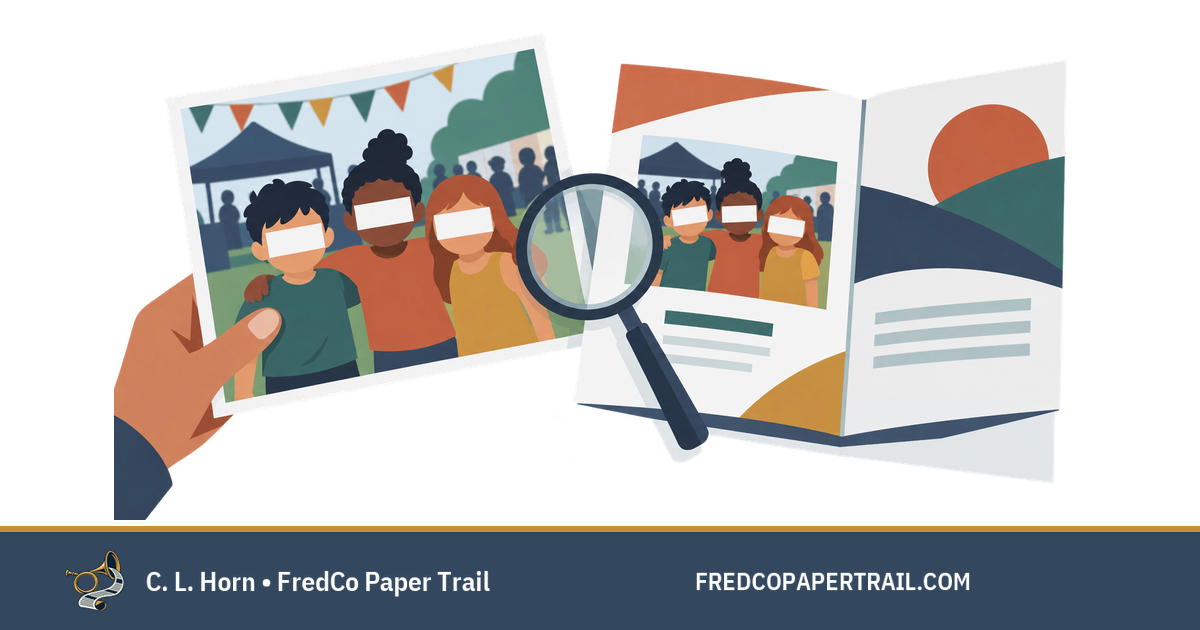
Children appear before any tax figure, construction estimate or policy promise in Rowan’s mailer.
On the cover, they hold a “Thank You Rowan” sign. Inside, photographs connected to school and nonprofit programs give the community-benefit argument faces, emotion and local familiarity.
The programs may be real and worthwhile. The images still raise separate questions about where they came from, what permission governed their use and whether children needed to remain identifiable in a countywide corporate mailer.
Start With Provenance
Image provenance is the documented chain showing where a photograph came from, what event it depicts, who supplied it and what agreement or permission governed its use.
The prominent photograph depicts a Boys & Girls Clubs of Frederick County technology-lab event, not an FCPS classroom. That identification changes the institution, setting and likely permission path.
It does not establish the complete chain for the exact image or its later reuse in direct mail.
Consent, Copyright And Privacy Are Different Questions
A photographer may own the image. A parent may have signed a release. An organization may have permission to publish event photographs. A corporate sponsor may have separate reuse rights.
Even when those legal and contractual questions are satisfied, an editor still decides whether republishing an identifiable child is necessary and proportionate.
FredCo Paper Trail will obscure minors’ faces in reproduced mailer material and retain the original images privately for verification. That is an editorial decision, not a finding that Rowan acted illegally, that a parent objected or that a child was harmed.
The Strongest Counterpoint
Community organizations routinely document programs through photographs. Families may welcome public recognition of a new lab, meal program or school event. Removing children entirely can make community reporting feel abstract and disconnected from the people served.
That concern is real.
The answer is proportion. Verify the event. Explain the setting. Use the image only when it adds evidence. Reduce identification when the same reporting purpose can be served without it.
The mailer establishes that Rowan chose photographs of children as part of its public argument. The programs depicted may be genuine. The complete authorization chain for the exact images and their later promotional reuse remains unresolved.
Next, the series looks at the programs behind those photographs and asks what Rowan’s community projects actually provided.
Sources
- Rowan mailer, cover and pages 2, 8 and 9.
- Boys & Girls Clubs of Frederick County: Rowan Technology Lab
- Boys & Girls Clubs event and program material collected in the source audit.
- FredCo Paper Trail Methodology
Corrections: FredCo Paper Trail welcomes corrections supported by source records. See our Corrections policy. Material changes to this article will be dated and described on this page.